
Your shopping cart doesn't have any products yet!


Thermal Insulation for Buildings
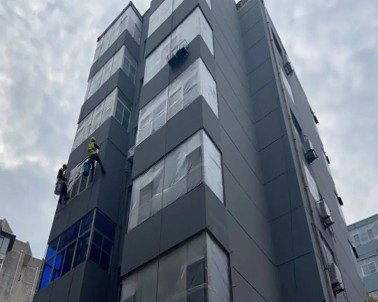
China, as a rapidly developing nation, has a massive building market, with new residential constructions reaching 1.7 to 1.8 billion square meters annually—more than the total building area of all developed countries combined. Due to inadequate thermal insulation, the share of building energy consumption in China's total energy consumption has surpassed 27%. Therefore, improving thermal insulation and implementing the "Energy-saving Building, Green Building" policy is an essential task.
Current Situation:
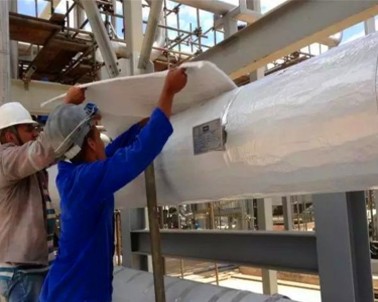
Currently, there is a wide range of building insulation materials, primarily categorized into organic materials like polystyrene boards, extruded boards, and polyurethane, and inorganic materials such as rock wool. Organic materials have poor fire resistance, posing safety risks for buildings, while inorganic materials often lack sufficient hydrophobicity, which also compromises building safety. The most ideal solution for building insulation today is the aerogel insulation blanket.
Advantages:
Inorganic material with an A-class fire rating
Extremely low thermal conductivity of 0.016 W/(m·K), effectively preventing cold and hot bridges, and saving space
Environmentally friendly with excellent heat preservation properties, reducing energy consumption
Superior sound insulation, creating a more comfortable environment
Overall hydrophobicity and stable structure
Inorganic and matches the lifespan of the building
Easy to construct and cut